Physiotherapy at Home in Delhi: Sessions, Charges and What to Expect
Regaining mobility and strength after an injury, surgery, or due to age-related conditions is crucial for independence. Discover how professional <strong>physiotherapy at home in Delhi</strong> can make this journey convenient and effective for you or your loved ones.
Key takeaways
- Home physiotherapy offers personalised, convenient care crucial for those with mobility challenges, ensuring consistent progress in a familiar environment.
- Sessions are tailored to individual needs, focusing on a thorough assessment, targeted exercises, manual therapy, and essential patient education.
- Costs vary by condition and location; these charges are separate from nursing rates, making it important to discuss your specific care plan clearly.
Introduction: Bringing Expert Care to Your Doorstep
For many individuals recovering from an injury, surgery, or managing chronic conditions, the journey to regaining mobility and independence can be challenging. The thought of travelling to a clinic for regular physiotherapy sessions, especially for someone with limited mobility or severe pain, can be daunting. This is where physiotherapy at home in Delhi emerges as an invaluable solution. Bringing expert rehabilitation directly to your living room offers not just convenience but also a more personalised and comfortable recovery experience. It removes the stress of transport, waiting times, and adapting to a new environment, allowing patients to focus entirely on their healing.
Who Benefits Most from Home Physiotherapy?
Home-based physiotherapy is particularly beneficial for a wide range of individuals, ensuring that quality care is accessible to those who need it most. Consider these common scenarios:
- Post-fracture Recovery: After a bone fracture, regaining strength and range of motion is vital. Home sessions allow for gradual, supervised exercises in a safe environment.
- Knee and Hip Replacement Rehabilitation: Patients recovering from major orthopaedic surgeries like total knee replacement or hip replacement often require intensive, consistent physiotherapy. Home care ensures continuity of the rehabilitation programme without the strain of travel.
- Stroke Recovery: Stroke survivors often face significant motor and cognitive impairments. A structured physiotherapy programme at home can help improve balance, coordination, and muscle function, essential for daily activities. See our related article on stroke patient care at home for more insights.
- Parkinson's Disease Management: Physiotherapy helps manage symptoms like rigidity, tremors, and balance issues, improving the quality of life for individuals with Parkinson's.
- Frozen Shoulder (Adhesive Capsulitis): Targeted exercises and manual therapy at home can effectively restore mobility and reduce pain associated with frozen shoulder.
- Chronic Back Pain: For persistent back pain, a personalised exercise programme and posture correction guidance from a home physiotherapist can offer significant relief.
- Deconditioned Elderly Individuals: Older adults who have become weak or frail due to illness or prolonged bed rest can greatly benefit from gentle exercises to rebuild strength, balance, and overall function. This is a crucial aspect of comprehensive elderly care at home in Delhi.
What Does a Home Physiotherapy Session Involve?
A typical home physiotherapy session is comprehensive and tailored to the individual's needs. Here's what you can expect:
- Initial Assessment: The physiotherapist will conduct a thorough assessment of the patient's condition, medical history, pain levels, mobility, and functional limitations. They will discuss goals and develop a personalised treatment plan.
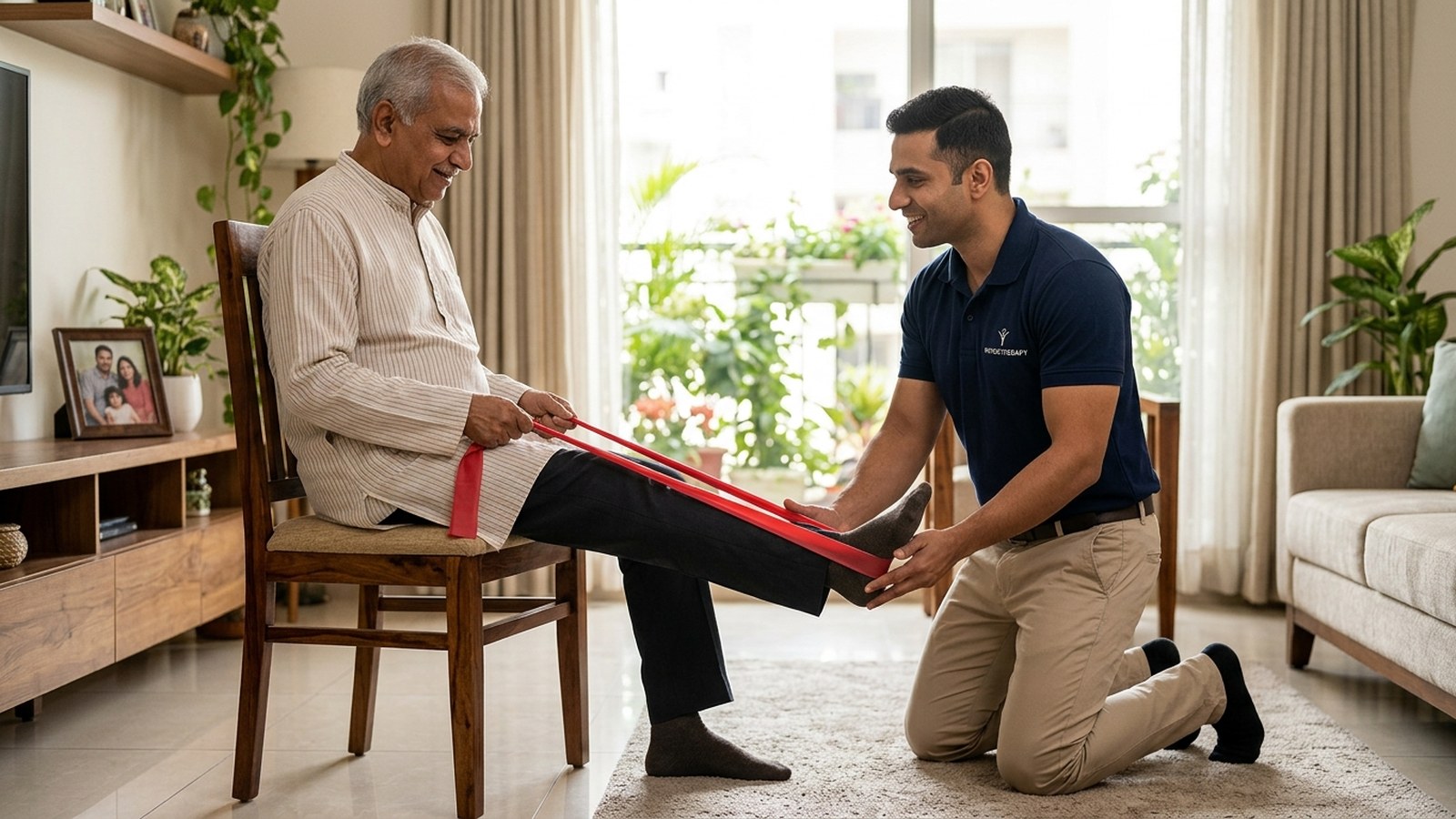
- Therapeutic Exercises: This forms the core of the session. Exercises may include strengthening routines, range-of-motion drills, balance training, flexibility exercises, and gait training (walking practice).
- Manual Therapy: Techniques such as massage, joint mobilisation, and stretching may be used to reduce pain, improve circulation, and restore joint movement.
- Pain Management: The therapist may use modalities like heat or cold packs, or teach pain-relieving strategies and positioning techniques.
- Patient and Family Education: A vital component is educating the patient and family members on the condition, home exercise programmes, proper body mechanics, and ways to prevent re-injury.
- Progress Monitoring: Each session builds upon the last, with the physiotherapist continually monitoring progress, adjusting the treatment plan as needed, and celebrating milestones.
How Many Sessions Are Typically Needed?
The number of physiotherapy sessions required varies significantly depending on the patient's condition, severity, age, and responsiveness to treatment. There's no one-size-fits-all answer, but generally:
- Acute Injuries: For recent injuries, a short course of 6-10 sessions over a few weeks might be sufficient.
- Post-Surgical Rehabilitation: Conditions like knee or hip replacement often require a more extended programme, potentially 15-25 sessions spread over several months, sometimes even longer for full recovery. You can read more about this in our article on post-operative rehabilitation and home recovery.
- Chronic Conditions or Neurological Issues: For conditions like Parkinson's, stroke recovery, or chronic back pain, physiotherapy might be ongoing, involving regular sessions for many months or even as a long-term management strategy to maintain function and prevent decline.
Your physiotherapist will provide a clearer estimate after the initial assessment, setting realistic expectations for your recovery journey.
Equipment for Home Physiotherapy
One of the advantages of home physiotherapy is that it often requires minimal specialised equipment. Many exercises can be performed using everyday household items. Your physiotherapist will guide you on what might be useful:
- Basic Items: A sturdy chair, cushions, a wall for support, and comfortable clothing are often all that's needed.
- Therapist-Provided Tools: The physiotherapist will typically bring portable items such as resistance bands, small weights, exercise balls, or a TENS machine (for pain relief) if required.
- Creating a Safe Space: Ensure a clutter-free, well-lit area with enough room for movement. Good ventilation is also important.
The focus is always on utilising the home environment effectively to achieve therapeutic goals, making physiotherapy at home in Delhi highly adaptable.
Home vs. Clinic: A Critical Comparison for Mobility Challenges
While clinics offer access to a wider range of equipment, home physiotherapy presents distinct advantages, especially for those with poor mobility or specific health concerns:
- Convenience and Comfort: No travel, no waiting rooms. Patients can receive treatment in their own familiar and comforting surroundings, which can reduce anxiety and enhance compliance.
- Reduced Risk: For elderly or frail patients, travelling to a clinic increases the risk of falls or exposure to infections. Home care mitigates these risks.
- Personalised Environment: The therapist can assess the patient's actual living space and tailor exercises to improve function within that specific environment, making rehabilitation highly practical for daily life.
- Family Involvement: Family members can easily observe sessions, learn how to assist with exercises, and understand the care plan, fostering a supportive recovery network.
- Holistic Approach: Home physiotherapy is often part of broader home health care services in Delhi NCR. This allows for better coordination with other services like nursing care or attendant support, creating a comprehensive care plan. For families seeking the best home nursing services in Delhi, integrating physiotherapy into this framework ensures all needs are met efficiently.
Understanding Physiotherapy Charges at Home in Delhi
It's important to understand that physiotherapy charges for home visits are typically quoted separately from general nursing or attendant rates. The cost for physiotherapy at home in Delhi can vary based on several factors:
- Condition Severity: More complex conditions requiring specialised techniques or longer session durations may incur higher costs.
- Duration and Frequency of Sessions: A single session rate might differ from a package deal for multiple sessions.
- Location: While CareShield serves across Delhi NCR (South/East/West/North Delhi, Dwarka, Rohini, Noida, Greater Noida, Gurgaon, Faridabad and Ghaziabad), specific localities might have slight variations.
- Type of Physiotherapist: Specialised therapists with extensive experience might have different rates.
CareShield focuses on transparency. For general home health support, our published rates include:
- Nursing Officer home visit — ₹799 (basic injectable included)
- GDA/attendant at home — ₹1,000 for 6 hours, ₹1,250 for 10 hours, ₹1,600 for 24 hours
- Critical Care Nursing — ₹1,850 for 10 hours, ₹2,550 for 24 hours
Maintaining Progress Between Sessions
Physiotherapy is not just about the sessions with the therapist; it's also about consistent effort between visits. To maximise your recovery and maintain progress:
- Adhere to Your Home Programme: Diligently follow the exercises and advice given by your physiotherapist. Consistency is key.
- Involve Family: Encourage family members to understand the exercises and provide gentle reminders or assistance if needed.
- Stay Hydrated and Nourished: Proper nutrition and hydration support muscle repair and overall healing.
- Communicate: Keep a log of your progress, pain levels, and any challenges you face. Share this information with your physiotherapist at the start of each session.
- Listen to Your Body: While consistency is important, avoid overexertion. Rest when needed and report any new or worsening pain immediately.
By actively participating in your recovery, you take ownership of your health and ensure the best possible outcomes.
How CareShield Supports Your Recovery Journey
At CareShield, we understand the importance of comprehensive care for a successful recovery. Our dedicated team extends beyond just nursing, offering holistic home health care services in Delhi NCR that can seamlessly integrate with your physiotherapy needs. When you choose CareShield for your nursing care at home in Delhi, you receive services from police-verified, trained, and experienced professionals. A verified nurse or attendant can usually be assigned within 2-4 hours, providing immediate support. We are available 24/7, offering a free replacement guarantee and daily WhatsApp updates to keep families informed.
Whether you require a caretaker for old age at home in Delhi, an attendant for patient at home in Delhi, or even a 24 hour nurse at home in Delhi to support daily activities alongside your physiotherapy, CareShield ensures professional and compassionate patient care at home in Delhi. To organise your care plan, including expert physiotherapy, visit our booking page or call us at +91 87507 73438.